
Editorial note
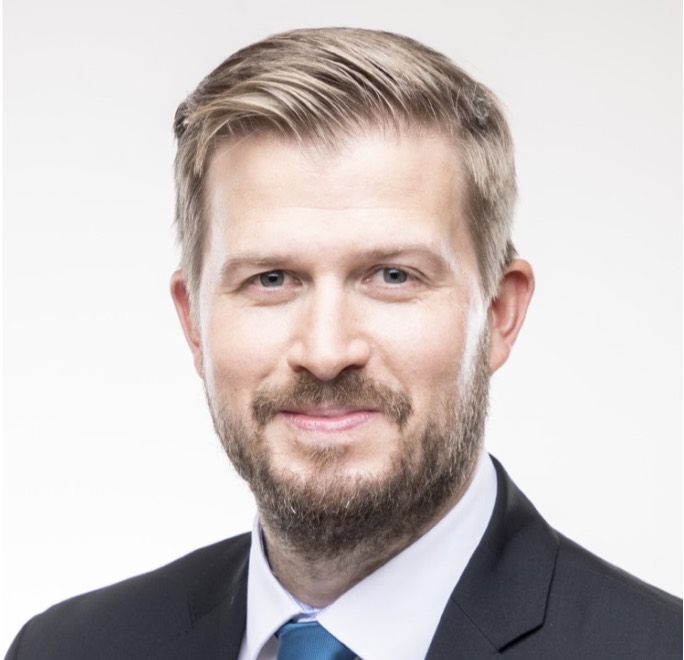
Few people see the maritime transition from as many angles as Arne Maibohm. At Hapag-Lloyd, he works across fleet strategy, regulation and alternative fuels — the groundwork that rarely shows from the outside. We asked him where the real bottlenecks are, what the industry gets wrong about collaboration, and the one decision he thinks shipowners will regret in five years.
Hapag-Lloyd's decarbonization strategy spans everything from technology partnerships to fuel sourcing. What has scaling that across an entire fleet taught you about where the real bottlenecks actually are — technology, supply, or something else entirely?
Our approach to decarbonization involves a wide range of levers, from fleet strategy, network design and operational improvements to new technologies, energy efficiency measures and the use of lower-carbon alternative fuels. What we have learned is that implementing these measures requires a great deal of groundwork that is often not visible from the outside. While energy efficiency improvements and technological solutions can often deliver benefits on their own, the transition to alternative fuels presents a much bigger challenge.
In my view, the real bottleneck is the significant cost gap between conventional fossil fuels and lower-carbon alternatives. Bridging that gap will be one of the decisive factors in determining whether the maritime industry can achieve its ambitious decarbonization targets. This will require regulatory certainty, long-term demand signals and customers who are willing to contribute to the cost of the transition. Ultimately, decarbonizing shipping is not something carriers can achieve on their own. It requires a joint effort across the entire value chain.
You've been notably firm that sustainable biofuels need real life-cycle assessment, not just the label. Where do you see the industry cutting corners on that right now, and what would it take to fix it?
One of the main challenges is the complexity of the existing supply chains. They involve many different stakeholders and intermediaries, including producers, collectors, traders and final fuel suppliers. Ensuring full transparency across these chains is not always straightforward. Without fully recognized and certified supply chains, as well as clear and consistent regulations, obtaining all the necessary documentation to demonstrate the actual environmental benefits of alternative fuels can be quite cumbersome.
This is why standardized life-cycle assessments (LCA), consistent calculation methodologies and reliable certification and documentation are so important. We need to look at the full life cycle of a fuel rather than simply relying on whether it is labelled as sustainable. Greater transparency and comparability will also help build trust among cargo owners. And that trust is essential, because we need our customers to support the transition and help manage the additional costs associated with lower-emission shipping.
Decarbonizing shipping is not something carriers can achieve on their own. It requires a joint effort across the entire value chain.
The IMO's Net-Zero Framework introduces a surplus-carbon-unit mechanism you've spoken about publicly. How should shipowners actually be thinking about that opportunity, rather than treating it as just another compliance cost?
For us, a global level playing field is an important guiding principle for future investments in decarbonization. A global regulatory framework, such as the IMO Net-Zero Framework, could provide the clarity and stability that the shipping industry needs to make long-term investment decisions. Rather than viewing such a framework purely as an additional compliance burden, I believe shipowners should also consider the opportunities it could create. Companies that invest early in more efficient vessels, new technologies and alternative fuels could potentially turn this challenge into a competitive advantage, with the framework recognizing the benefits of being an early mover.
A mechanism for trading surplus carbon units could also help support the transition across different shipping segments. Some sectors, such as container shipping or cruising, may be better positioned to invest in decarbonization and recover the associated costs, while others, such as bulk carriers and tankers, often operate under more unpredictable voyage charter arrangements. A well-designed global framework could therefore help create incentives for early investment while supporting decarbonization across the wider maritime industry.
Multiple carriers are racing toward net-zero on different timelines and strategies. What's the biggest thing the industry gets wrong about coordinating decarbonization across competitors who, in some ways, need to move together?
I would not necessarily say that the industry is getting something wrong. The challenge is that we operate in a highly competitive market with long-established antitrust and competition regulations, which we must, of course, fully respect. Bringing competitors together to work towards a common objective is therefore not always straightforward. This is where independent organizations and neutral platforms can play an important role by creating the right environment for collaboration within the boundaries of competition law. Green corridor initiatives are a good example of how this can work.
At the end of the day, we need strong and credible demand signals for alternative fuels at scale. Many alternative-fuel projects are struggling to reach a final investment decision because producers need confidence that sufficient long-term demand will exist. Creating that confidence across the value chain is where collaboration can make a real difference. If we manage to bring fuel producers, shipping companies, cargo owners and other stakeholders together in a competition-compliant way, we can help turn ambitious plans into actual investments and accelerate the transition.
The best and most economically viable fuel is the one we do not need in the first place.
If you had to flag one decision shipowners are making right now that they'll regret in five years, what would it be?
I think one decision shipowners might regret is not engaging early and seriously enough with energy efficiency technologies, particularly those with longer payback periods. Too often, investment decisions are assessed primarily on the basis of short-term return on investment. But when it comes to decarbonization, we need to take a longer-term perspective and recognize the value of investing in a cleaner and more efficient future.
Ultimately, the best and most economically viable fuel is the one we do not need in the first place. That is why energy efficiency deserves particular attention. It often comes down to weighing a one-off CAPEX investment against potentially much higher OPEX over the lifetime of a vessel. Investing in efficiency today can reduce fuel consumption and operating costs for many years to come. And as alternative fuels are likely to remain more expensive than conventional fuels for the foreseeable future, those efficiency gains will become even more valuable.
In closing
What Arne Maibohm makes clear is that the transition is not waiting on technology — it is waiting on economics. The cost gap between fossil and alternative fuels remains the decisive constraint, and no single carrier can bridge it alone. The work being done at Hapag-Lloyd on LCA rigour, efficiency investment, and regulatory positioning reflects a longer-horizon view that many in the industry are still reluctant to hold.
His point on energy efficiency is worth sitting with. In a sector focused on which fuel comes next, the unglamorous work of reducing how much fuel is needed in the first place may turn out to be the most durable competitive advantage.
Explore more Spotlight conversations, subscribe below for future interviews, or let us know if you believe your perspective belongs in the conversation.
Key perspectives from this conversation
Decarbonizing shipping is not something carriers can achieve on their own. It requires a joint effort across the entire value chain.
The best and most economically viable fuel is the one we do not need in the first place.
About the author
About Arne Maibohm
Arne is responsible to coordinate and drive forward Hapag-Lloyd's overall decarbonization topics, including but not limited to strategic target setting and tracking, development of solutions in fuel efficiency, future proof propulsion and fuel options as well as regulatory adherence. After graduating Arne joined Hapag-Lloyd in August 2002 as an apprentice. After having worked 2 years in Hong Kong he returned to Hamburg in 2007 to join the Network and Cooperation department where he gained a broad knowledge and understanding of the container shipping industry. In May 2021 Arne moved to the sustainability department and since October 2022 he is in charge of the decarbonization team.
View LinkedIn profileRadius Spotlight
Who should we hear from next?
Know someone in maritime decarbonization whose perspective the industry should hear? We review every nomination editorially.
Nominate a voice →From the same sector
I don't believe the industry necessarily needs more dashboards.
Capt. Mohit Sabharwal
Master Mariner | Maritime Commercial, Operations & Technology Leader | Digital Transformation & Decarbonization
At least 80 percent of the investments required to decarbonize shipping needs to be made in other segments of the value chain than within the shipping industry itself.

Nina Porst
Executive Director, Sustainable Ships & Skills · Danish Shipping

The question shouldn't only be 'Are we compliant today?' but also 'What do these regulatory changes mean for our fleet and business decisions tomorrow?'

Simon Göß
Managing Partner · carboneer