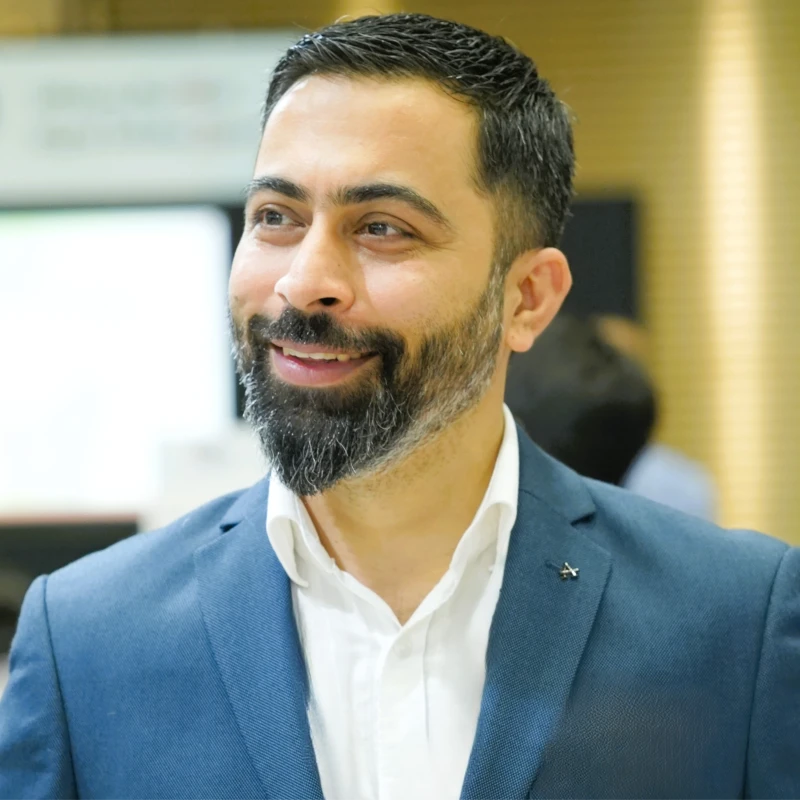
Capt. Mohit Sabharwal
Master Mariner | Maritime Commercial, Operations & Technology Leader | Digital Transformation & Decarbonization
View LinkedIn profileEditorial note
Few people have seen maritime from as many sides as Capt. Mohit Sabharwal — more than 25 years from commanding vessels to leading commercial operations and technology ventures across the GCC, MENA and Asia-Pacific. We asked him what technology companies get wrong about the region, what actually drives adoption, and the one shift that could move decarbonization furthest.
You've spent over 25 years in maritime, from commanding vessels to leading commercial operations and technology ventures. What do international maritime technology companies often misunderstand when entering markets such as the GCC, wider MENA region and India?
One common mistake is assuming that a successful product in one market will automatically succeed in another. These are relationship-driven markets, but relationships alone do not win business. You need to understand how decisions are made, who influences them, and what challenges customers are actually trying to solve. A shipowner, charterer, terminal operator and offshore company may all look at the same technology very differently.
I have seen companies enter with impressive technology and ambitious growth plans, but without enough understanding of local operations, procurement cycles or customer expectations. They underestimate the importance of having people on the ground who understand both the industry and the business culture.
Through my commercial leadership roles and my work with Keel & Kernel, I have learned that successful regional expansion is not simply about opening doors or generating leads. It is about understanding the customer's business, building the right relationships and staying involved long enough to make the solution successful. I have worked on both sides of this equation, as someone responsible for maritime operations and later as someone bringing technology solutions to the industry. That combination has shaped how I approach market development. For me, successful market entry is about local understanding, long-term commitment and delivering on promises.
Through OceanOpt and your earlier ventures, you've worked across emissions management, regulatory compliance, voyage optimisation and vessel performance. What really drives commercial adoption of these solutions?
I think the biggest challenge is not always awareness. Most shipping companies already understand that fuel efficiency, emissions and regulatory compliance matter. The real question is whether a proposed solution makes commercial and operational sense for their business.
Take voyage optimisation, for example. It should not be viewed simply as finding a better route. The discussion needs to include fuel consumption, weather, voyage economics, charter-party obligations and, increasingly, the cost of emissions. A decision that looks efficient from one perspective may not be the best overall commercial decision. Compliance is another example. With regulations such as EU ETS and FuelEU Maritime, companies need reliable data, clear accountability and confidence in the calculations. But many operators are already managing several systems, reporting requirements and competing priorities. Adding another platform without simplifying their work can create resistance.
From my experience, customers rarely make these decisions based on features alone. They want to understand what the solution will save, what risks it will reduce, how easily it can be implemented and who will support them when something goes wrong. I have seen how a technically strong proposition can struggle when its commercial value is unclear. Equally, a well-supported solution that addresses a genuine operational problem can gain traction much faster.
In shipping, the real question is not simply what the technology can do, but what it can improve for the business.
These are relationship-driven markets, but relationships alone do not win business.
Having worked across international maritime markets, including the Middle East and Asia-Pacific, what do you think the wider decarbonisation conversation sometimes overlooks?
I believe the industry needs to recognise that the starting point is not the same for everyone. European regulations have understandably shaped much of the decarbonisation discussion. But shipping is global, and different markets have different commercial pressures, fleet profiles, infrastructure readiness and investment priorities.
Across the Middle East and Asia, we see significant activity in energy, shipping, ports and offshore operations. There is genuine interest in sustainability, but businesses are also managing fleet expansion, operating costs, trade uncertainties and long-term infrastructure investments. Another point often overlooked is the existing fleet. We spend considerable time discussing future fuels and next-generation vessels, which are important. But thousands of ships operating today will remain in service for years. Improving their efficiency through better voyage planning, vessel performance monitoring, maintenance and operational decisions can deliver benefits now.
I also believe decarbonisation should not be treated as a standalone sustainability initiative. It is increasingly connected to commercial performance, chartering decisions, fleet management and business competitiveness. We need a transition that is ambitious, but also practical, commercially workable and relevant to the fleets operating today.
You've been involved in maritime digital transformation from onboard implementation to business leadership. Where does digitalisation usually lose momentum, and what separates successful projects from those that remain underused?
Having spent the first part of my career at sea, I tend to look at digitalisation from the user's perspective.
One of the most common problems is that organisations invest in technology without spending enough time understanding how people actually work. A solution may look excellent during a demonstration, but the reality onboard a vessel or inside a busy operations team can be quite different.
Over the years, I have been involved in deploying digital solutions onboard vessels and later helping scale a maritime and offshore workforce technology venture supporting more than 5,000 active users. These experiences taught me that technology adoption becomes much more challenging when you move from a small pilot to everyday use across a larger organisation. You can have a successful demonstration and still struggle with adoption. People need to understand the value, workflows need to make sense, and management must actively support the change. Otherwise, even good technology can become another reporting burden. One lesson I have learned is that a successful implementation gets a system running, but real transformation happens when people are using it and the business is benefiting from it.
I don't believe the industry necessarily needs more dashboards.
Looking ahead over the next few years, what is the single biggest change that could accelerate maritime decarbonisation and performance improvement?
If I had to choose one, it would be bringing operational performance, commercial decisions and emissions management closer together. Today, these areas are still often managed separately. Operations teams focus on vessel efficiency, commercial teams focus on voyage economics, and compliance teams focus on regulatory reporting. Yet many of the decisions they make affect all three.
A voyage decision influences fuel consumption, operating costs, emissions exposure and potentially charter-party performance. These cannot always be optimised independently.
We already have significant amounts of vessel and operational data. The opportunity now is to turn that information into decisions that people can trust and act upon, supported by experienced professionals who understand the realities of shipping.
I don't believe the industry necessarily needs more dashboards. It needs better-connected information, clearer ownership of decisions and stronger collaboration between commercial, operational and environmental teams. Having worked across vessel operations, commercial management and technology businesses, I believe the next big improvement in maritime decarbonisation may not come from another technology platform. It may come from getting the people, information and decisions we already have, to work better together.
In closing
What Capt. Mohit Sabharwal makes clear is that the gap in maritime digitalisation and decarbonisation is rarely technological. It is organizational — the distance between the data companies have, the decisions they need to make, and the people who actually have to act on them.
His perspective, shaped by 25 years on both sides of the market, is a useful corrective to the instinct to add more platforms. The harder work is making what already exists actually useful to the people responsible for running the ships.
Explore more Spotlight conversations, subscribe below for future interviews, or let us know if you believe your perspective belongs in the conversation.
Key perspectives from this conversation
These are relationship-driven markets, but relationships alone do not win business.
I don't believe the industry necessarily needs more dashboards.
About the author
About Capt. Mohit Sabharwal
Capt. Mohit Sabharwal is a Master Mariner and maritime commercial and technology leader with over 25 years of experience across shipping, ports, offshore and energy sectors. His career spans commanding oil tankers, commercial voyage operations with Maersk Tankers, port and terminal operations, and leadership roles in maritime technology ventures. His work has covered enterprise SaaS growth, strategic partnerships, digital transformation, operational performance and maritime decarbonization. Recognised among Seatrade Maritime's Top 20 Under 40 and recently honoured with the Excellence in Professional Services Award at ShipTek 2026, he brings a practical perspective shaped by experience at sea, commercial leadership and building technology-driven businesses across international markets.
View LinkedIn profileRadius Spotlight
Who should we hear from next?
Know someone in maritime decarbonization whose perspective the industry should hear? We review every nomination editorially.
Nominate a voice →From the same sector
The best and most economically viable fuel is the one we do not need in the first place.
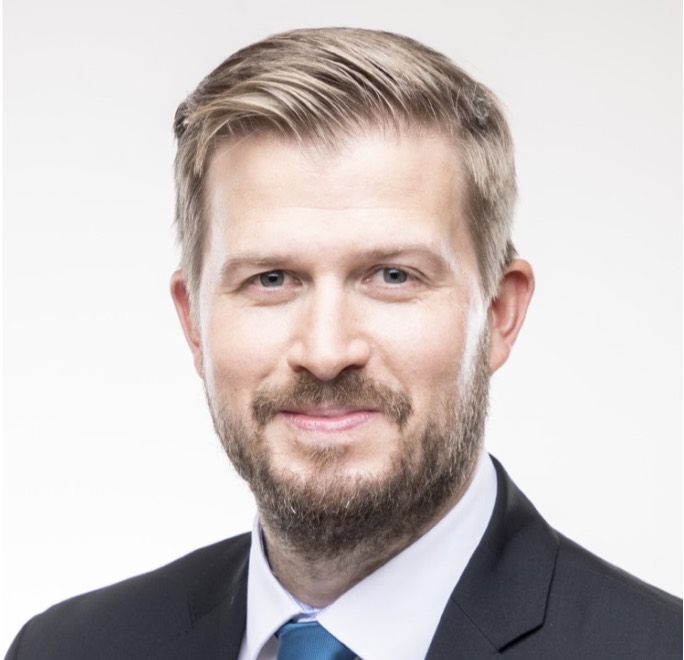
Arne Maibohm
Director Decarbonization · Hapag-Lloyd
The question shouldn't only be 'Are we compliant today?' but also 'What do these regulatory changes mean for our fleet and business decisions tomorrow?'
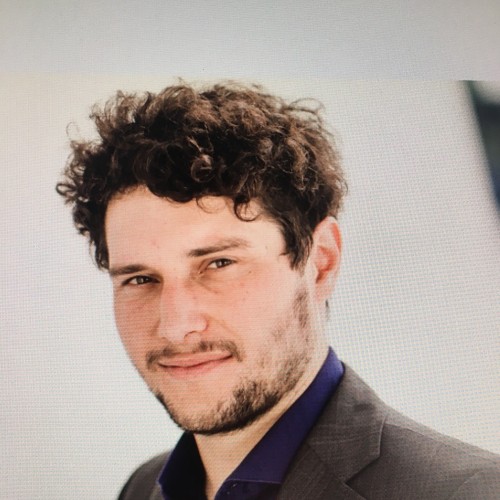
Simon Göß
Managing Partner · carboneer

Liquidity follows price discovery, and volume follows liquidity, in that order.
Gavin McGrath
Co-founder & Partner · Verdaxis