
Editorial note
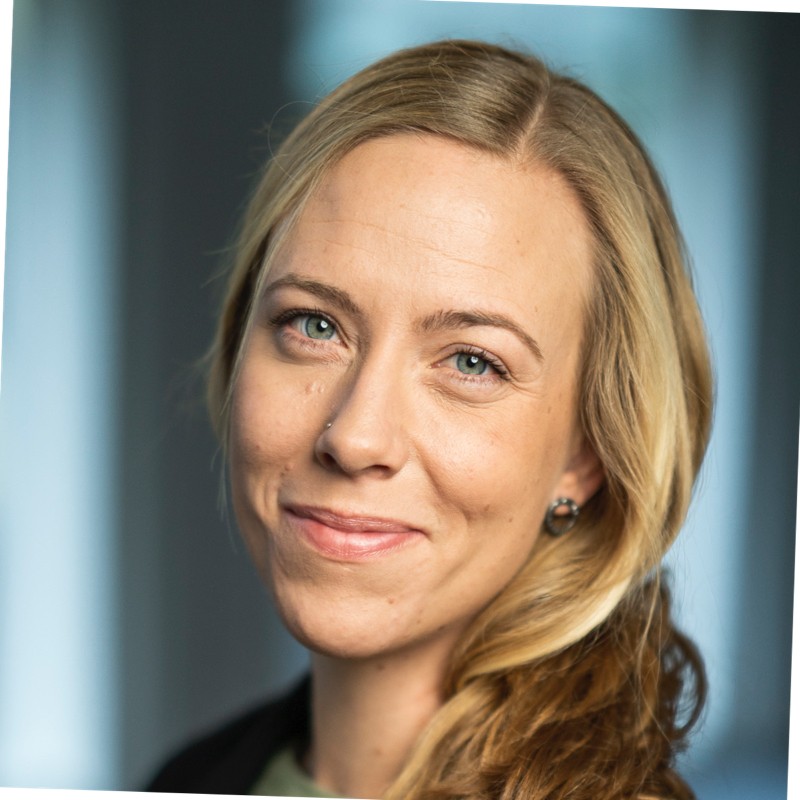
Nina Porst leads Sustainable Ships & Skills at Danish Shipping, the trade organisation representing the Danish shipping industry. Her work sits at the intersection of decarbonization and workforce readiness — the two challenges the industry usually treats separately, but that Porst argues are deeply linked.
As Executive Director for Sustainable Ships & Skills at Danish Shipping, what's the biggest misconception people outside the industry have about how fast Danish shipping can actually decarbonize?
There's an 80/20 percent rule that's often mentioned in reference to the process of decarbonization. The first 80 percent of CO2-reductions comes from the first 20 percent of the effort, investments or technology. The last 20 percent is much harder. This is definitely true. But there's another 80/20 percent rule that I think is equally valid and important. Namely, at least 80 percent of the investments required to decarbonize shipping needs to be made in other segments of the value chain than within the shipping industry itself. We are talking infrastructure, electrification, large-scale production of alternative fuels etc. etc. That is a huge barrier. And in my view the biggest misconception of what it actually takes to decarbonize Danish shipping.
"Skills" sits right in your title alongside "sustainable ships," how much of the decarbonization challenge do you think is actually a workforce and talent problem rather than a technology problem?
I don't think that the workforce or talent are the main issues when it comes to decarbonization – although they are large structural challenges in and of their own. Obviously, we need more people in the workforce that are qualified to work with green technology, new fuel types and so forth. But I think that there are much bigger structural challenges concerning everything that surrounds the actual decarbonization efforts going on in the shipping industry. Politics, the missing global regulation, insufficient infrastructure, and financing are the primary barriers at this point in time.
At least 80 percent of the investments required to decarbonize shipping needs to be made in other segments of the value chain than within the shipping industry itself.
Denmark punches above its weight in global shipping. What's Danish Shipping doing differently to prepare the industry's workforce for alternative fuels and new vessel technologies that other countries could learn from?
We have a very long and proud maritime history in Denmark. Even before Denmark existed, the people living here were sailors. We also have a lot of companies specializing in green tech. Perhaps those things combined have resulted in Danish shipping being in the forefront of the green maritime transition? Obviously, it's also very important that we are home to some of the world's most progressive and "climate ambitious" shipping companies. This also characterizes a lot of what we do in Danish Shipping. We work to secure optimal framework conditions for the Danish shipping industry, and we focus a lot on education, green fuels and ambitious global climate regulation.
What does a shipping company actually need to have in place internally, roles, training, partnerships, before its crews and shore staff are ready to operate on alternative fuels, not just the vessels themselves?
First and foremost, shipping companies must ensure that the relevant employees, both at sea and ashore, are properly upskilled in relation to the specific alternative fuel and the new operational requirements that come with it. This includes formal education and training, as well as access to ongoing professional guidance and opportunities to exchange experiences.
Education and training programmes are already available within the industry, and there is a growing ecosystem of providers, educational institutions, and other partners that can support the transition. At the same time, the field is still evolving, which means that a significant part of skills development continues to take place through practical experience and learning-by-doing.
Politics, the missing global regulation, insufficient infrastructure, and financing are the primary barriers at this point in time.
Is the maritime industry currently competing for the same limited pool of "green skills" talent as other sectors like renewable energy, and if so, what does Danish Shipping do to win that competition?
We are competing for employees and skills along with everyone else. Not just for "green skills". We are continuously making the case that green skills need to be prioritized in the educational system. The Danish shipping companies are working very hard to recruit and retain employees. And in Danish Shipping we are very active in making sure that young people learn about the possibilities for exciting and meaningful maritime careers both at sea and on shore.
In closing
What makes Nina Porst's perspective useful is her refusal to let decarbonization be treated as a shipping-industry problem alone. The 80/20 inversion she describes — that most of the investment required sits outside the sector — reframes where the real bottlenecks are, and where the pressure needs to land.
Her point on skills is equally clear-eyed: the workforce challenge is real, but it is downstream of the structural failures. Without the right regulation, infrastructure, and financing in place, even the most highly trained crews are waiting on a transition that hasn't yet been built around them.
Explore more Spotlight conversations, subscribe below for future interviews, or let us know if you believe your perspective belongs in the conversation.
Key perspectives from this conversation
At least 80 percent of the investments required to decarbonize shipping needs to be made in other segments of the value chain than within the shipping industry itself.
Politics, the missing global regulation, insufficient infrastructure, and financing are the primary barriers at this point in time.
About the author
About Nina Porst
Nina Porst is Executive Director for Sustainable Ships & Skills at Danish Shipping, the trade organisation representing the Danish shipping industry. She works at the intersection of maritime decarbonization, workforce development, and the regulatory frameworks that will determine the pace of the transition. Nina is based in Copenhagen.
View LinkedIn profileRadius Spotlight
Who should we hear from next?
Know someone in maritime decarbonization whose perspective the industry should hear? We review every nomination editorially.
Nominate a voice →From the same sector
The best and most economically viable fuel is the one we do not need in the first place.
Arne Maibohm
Director Decarbonization · Hapag-Lloyd

The biggest risk isn't moving too early — it's waiting too long.
Alexander Döll
Chief Executive Officer · Methanol Institute