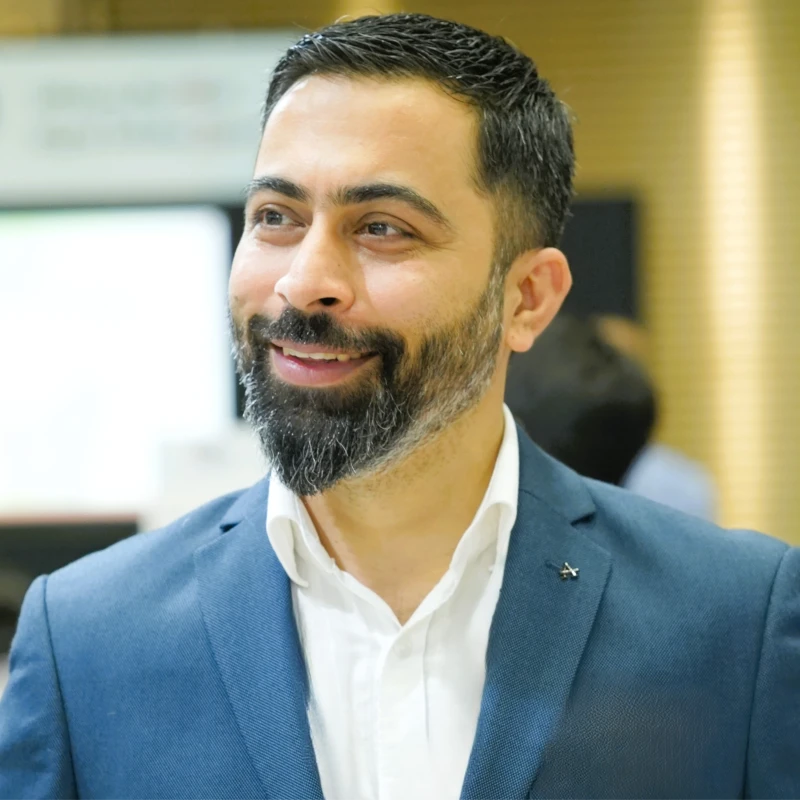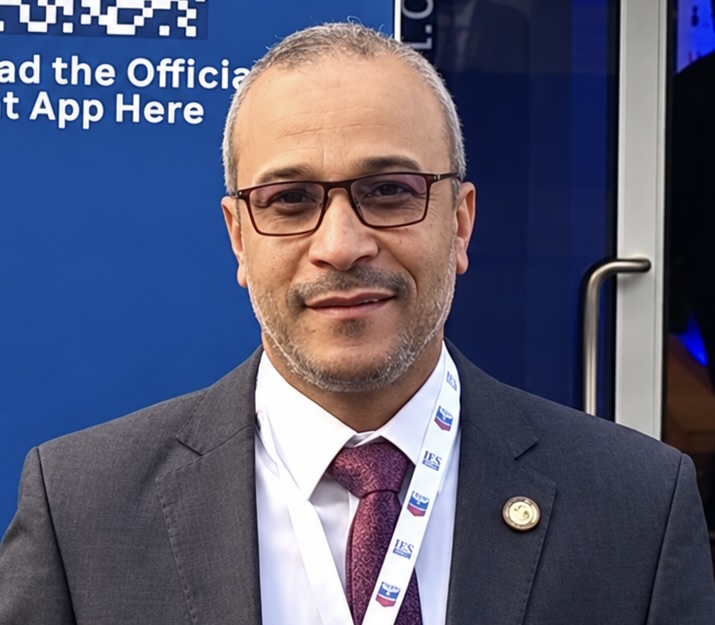
Eng. Ibrahim Ali Abdelhamid
General Marketing Manager · ESRBC
Editorial note
As Egypt pushes to become a regional maritime and logistics hub, its shipyards are moving from quiet national workhorses to strategic national assets. We sat down with Eng. Ibrahim Ali Abdelhamid of ESRBC to talk capability, the Suez advantage, and the one thing standing between Egyptian yards and far more international work.
Why does shipbuilding and repair matter more to Egypt today than before — and how does ESRBC serve Egypt's ambition to become a regional maritime hub?
Shipbuilding and repair is a heavy industry that serves the ports now being built across the country, in line with the political leadership's directives and Egypt's Vision 2030 to become one of the region's largest maritime and port hubs. That ambition requires strong shipyards capable of serving those ports and marine units of every kind — tugboats, fast boats, service craft and more. Where we once imported these units entirely from abroad, Egyptian yards can now build them locally at competitive quality and price. That saves hard currency, creates jobs, and builds national expertise — benefits that reach the whole Egyptian economy. We build in steel and aluminium, and in fibre too, and we have a new project coming to expand our aluminium and fibre work, in step with the country's development and tourism growth.
You build in steel and aluminium and repair vessels up to 9,000 tons. Which capabilities are you most proud of that owners and partners abroad may not realise Egypt has?
The company has a floating dock with a capacity of up to 9,000 tons — a medium capacity — equipped with mechanical slipways and a boat-lift that serve all our building and repair operations. We also have workshops equipped for every kind of work: mechanical, electrical, painting, piping and fit-out, and the lifting and launching of units. Every unit we build — boats, tugs and others — is built entirely within our own premises and workshops. And we welcome any international client; that in itself is a mark of the company's success.
Our work needs to be more visible on the world stage — because visibility is what brings in more work.
When an international owner decides where to build or repair, what do Egyptian yards offer — with the Suez location and more — that the traditional hubs don't? And what still needs to change to win more of that work?
Egypt's strategic location forces the yards here to be competitive: high-quality work, delivery within competitive timeframes, and a finished product worthy of Egypt's position. European and international vessels reach us — from the east or the north, through the Canal — at a certain standard, and I have to meet it. When I repair a vessel already built to a high standard, I can't hand it back at a lower one, or the client won't return. So our location compels us to match the quality of the ships themselves. What needs to change is that we expand further in the market, grow our capacity and our skilled workforce, and serve the international client at the same quality they would find abroad. Most importantly, our work needs to be clearer and more visible on the world stage — because visibility is what brings in more work.
From delivering tugboats like “Fahmy” to Damietta to offshore and Nile projects, your work spans a huge range. How do you balance serving national needs with competing for international commercial business?
Today we hold a large share of the Egyptian market — more than 80% of the marine-unit (tugboat) work. We are currently building more than 13 tugboats with high bollard pull, between 70 and 75 tons — a volume of orders no other yard in Egypt has had, and they all came at once, which shows how much the client trusts us. We delivered three of them six months ahead of schedule — something that rarely happens, and delivering that far ahead genuinely impresses a client. It reflects the company's excellence and our commitment to the best possible deliveries.
The client now comes to us.
Looking at the next five to ten years, what’s your vision for ESRBC — and for Egypt’s shipbuilding and repair industry on the global map?
Shipbuilding is an industry in constant growth, with ever-rising demand — especially with the new ports being built in the east and west of the country. I expect strong, continued demand for marine units of every kind. My ambition for the company is to maintain our lead in the Egyptian market, to enter and cover new segments, and to win a share of the global market. We are already working with Libya, Saudi Arabia and Iraq — and the best part is that the client now comes to us; the market welcomes us. We are looking forward to much more international work ahead.
Key perspectives from this conversation
Our work needs to be more visible on the world stage — because visibility is what brings in more work.
The client now comes to us.
About the author
About Eng. Ibrahim Ali Abdelhamid
Eng. Ibrahim Ali Abdelhamid is General Marketing Manager at the Egyptian Ship Repair & Building Company (ESRBC), one of Egypt’s leading shipbuilding and repair yards, based in Alexandria. ESRBC builds vessels in steel, aluminium and fibre and repairs ships of up to 9,000 tons for Egypt’s port authorities, commercial lines and international clients.
Radius Spotlight
Who should we hear from next?
Know someone in maritime decarbonization whose perspective the industry should hear? We review every nomination editorially.
Nominate a voice →