
Editorial note
We sat down with Daniel Barcarolo and Joe Bettles from the Mærsk Mc-Kinney Møller Center for Zero Carbon Shipping to talk about where the IMO Net-Zero Framework actually stands, where policy and real-world readiness still don't meet, and why the Gulf and Suez Canal zone are shaping up as candidates for the next wave of green fuel production and bunkering infrastructure.
The IMO Net-Zero Framework has shifted timelines more than once. For owners and operators trying to plan, how should they think about preparing now versus waiting for the next round of certainty?
While we, of course, had hoped that a regulation would already be in place, a global framework will establish the rules that will govern the future of shipping so it is important to get it right and to avoid any risk of repealing rules. Therefore, we still see a path forward where the IMO can agree and adopt a global framework with limited delay (by the end of the year) and high certainty for investment. Member States submitted papers to the upcoming sessions of the IMO, proposing solutions to address some of the concerns by other Member States, which shows a commitment from Member States towards finding a compromise. Although IMO is not a place to count numbers, as to how many support which proposal, it is fair to say that there is an overwhelming commitment from Member States to finding a way forward.
If Member States do find that path, and we believe it is possible, it will itself be a positive signal for the industry: proof that even a highly complex and sensitive framework can still be agreed multilaterally, giving the sector a stable foundation to build on. By December 2026 we may be in a situation where the IMO will have agreed on a global framework providing such long term visibility needed to the industry.
You work at the intersection of policy and technology. Where do you most often see that gap show up, where the regulation and the real-world readiness don't quite meet yet?
The difficult part is creating sufficient incentives such that new innovations can compete with established fuels and technologies. To do this requires certainty that the regulation will create the market for the innovation, and support for the needed period of time to develop, mature and scale the technology: this requires a long-term visibility that should be provided by regulations. We expect that the costs for the most advanced fuels and technologies will come down, as they have in other industries such as electric vehicles. But shipping is still years away from this. Therefore, policymakers need to have the long-term commitment to supporting the new technologies long enough for them to achieve scale. Another difficulty arises from the nature of shipping itself: it is an industry that contrary to many others, can accommodate many types of fuels and technologies. The challenge from a policy making perspective arises from having to land regulations that are technology agnostic while still finding ways to promote the most promising, scalable and sustainable solutions.
There is an overwhelming commitment from Member States to finding a way forward.
Regulation in this space is complex and fast-moving. In your experience, how well does the industry translate what these frameworks actually mean for the people who have to act on them, owners, financiers, ports?
When the regulation is in development or early in its roll out there is typically a lot of concerns from industry around compliance. In some cases this is also because the regulator is still working out the implementation and guidelines. However, when there are a clear set of rules, industry will always adapt. We saw this play out with FuelEU, where many were claiming that it was too complex and would create chaos. But looking at data from the first year, it largely seems to have worked smoothly. Once regulations are agreed upon, an important step that follows is the one of educating as much as possible shipping's value chain about the regulation, providing examples, clarifying aspects of it, etc. In a similar way that it was done for the FuelEU Maritime and EU ETS.
As green-fuel production scales in regions like the Middle East, green hydrogen and ammonia projects across the Gulf and the Suez Canal zone, how do you see these emerging supply hubs fitting into the global regulatory and decarbonization picture?
Production of green hydrogen and its derivatives will support its uptake in shipping. In large part because these fuels will be transported by ships and they will be logical first movers. We are seeing companies ordering ammonia gas carriers as dual-fuel even before ammonia has been used commercially in shipping. The Gulf and Suez Canal zone sit on some of the busiest East-West trade lanes, positioning them as candidates not just for production but for early bunkering infrastructure. For these hubs to scale, their output needs to be certifiable and creditable across markets, which is why a global, uniform framework like the IMO Net-Zero Framework matters more to them than fragmented regional rules. It gives producers one set of rules to sell into rather than separate compliance pathways for each jurisdiction.
When there are a clear set of rules, industry will always adapt.
If you could get one message through clearly to the decision-makers who control whether this transition speeds up or stalls, what would it be?
One message for industry would be to support the development of regulations that provide long-term certainty and incentives. The rules are complex and we need the industry at the table to support the development of a level playing field that can support investment and create clarity.
Key perspectives from this conversation
There is an overwhelming commitment from Member States to finding a way forward.
When there are a clear set of rules, industry will always adapt.
About the author
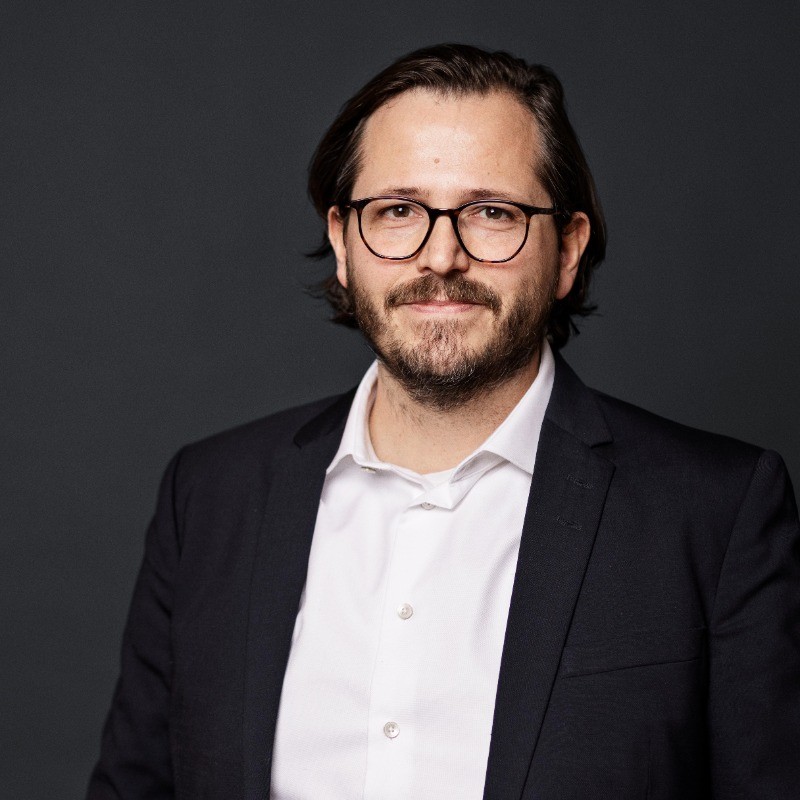
About Daniel Barcarolo
Daniel Barcarolo is Head of Regulatory Affairs at the Mærsk Mc-Kinney Møller Center for Zero Carbon Shipping, where he focuses on maritime decarbonisation, GHG strategy, energy efficiency, and the fuel transition. He is an IMO and EU policy expert, working at the intersection of regulation and real-world implementation to help the shipping industry navigate the path to net zero. Daniel is based in Copenhagen and trained at École Centrale de Nantes.
View LinkedIn profileAbout the author
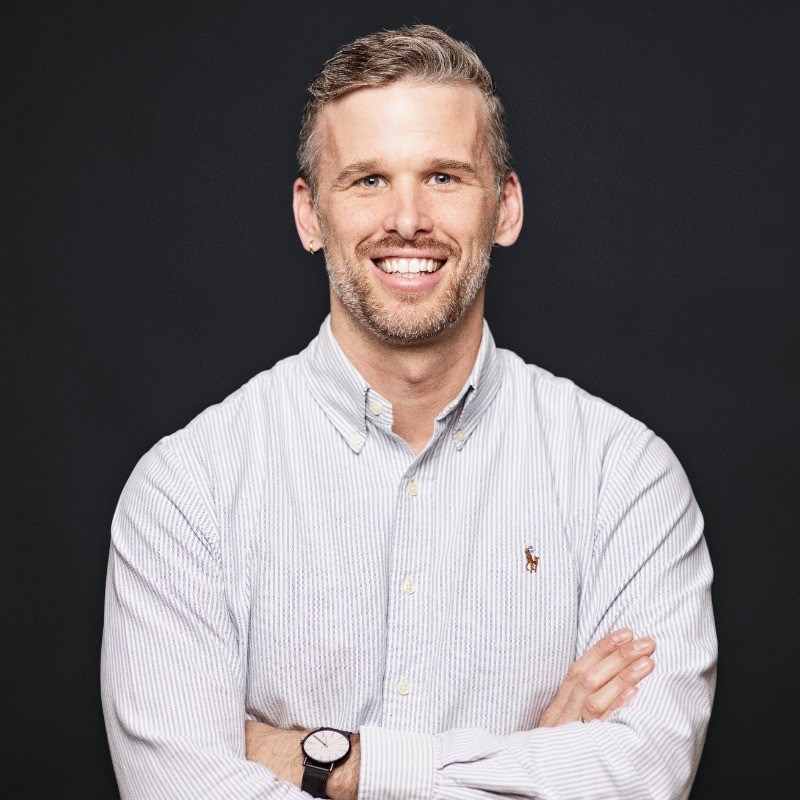
About Joe Bettles
Joe Bettles is Climate Policy Manager at the Mærsk Mc-Kinney Møller Center for Zero Carbon Shipping, where he leads analysis on the economic impact of climate policy on shipping companies and maritime fuel suppliers. He also authors the Center's Countdown newsletter, tracking the regulatory and market developments shaping the industry's transition to zero-carbon fuels. Joe is based in Copenhagen.
View LinkedIn profileExplore more Spotlight conversations, subscribe below for future interviews, or let us know if you believe your perspective belongs in the conversation.
Radius Spotlight
Who should we hear from next?
Know someone in maritime decarbonization whose perspective the industry should hear? We review every nomination editorially.
Nominate a voice →